the revelation
Last week I discovered something that completely changed how I think about AI-assisted development. It wasn't another GPT wrapper or coding autocomplete tool—it was Claude Code's sub-agent system, and it's honestly the most underrated development tool of 2025. ↆ
what are sub-agents?
Claude Code doesn't just give you one AI assistant—it gives you an entire specialized team of AI agents, each with specific expertise and tool access:
- General-purpose agents: Research complex questions, search codebases, execute multi-step tasks
- Statusline-setup agents: Configure your development environment
- Output-style agents: Customize code formatting and presentation
- And more specialized agents for specific domains
Think of it like having a senior developer, a DevOps engineer, a code reviewer, and a documentation specialist all working together seamlessly on your project.
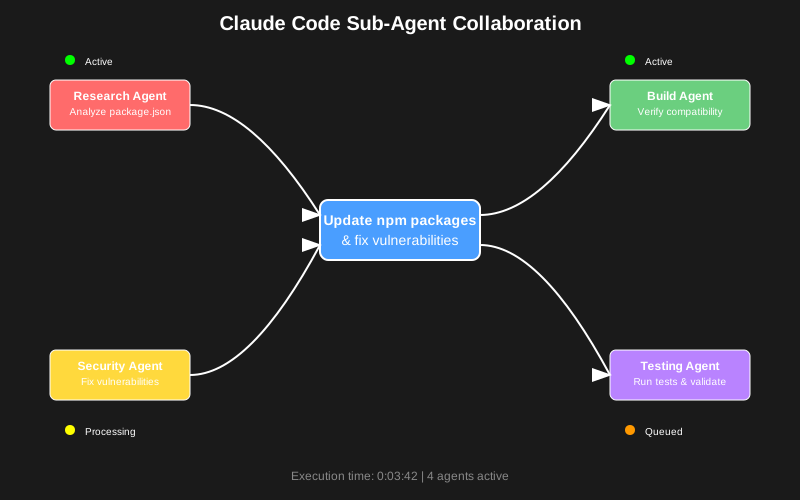 Multiple specialized agents collaborating on a single development task
why this changes everything
Traditional AI coding tools: You ask a question → Get an answer → Hope it's right → Manually verify and implement
Claude Code sub-agents: You describe a goal → Multiple specialized agents collaborate → Research, plan, execute, and verify → Present you with a complete, tested solution
Here's what happened when I asked Claude Code to "update my npm packages and fix security vulnerabilities":
- Research agent analyzed my
package.jsonand identified 24 vulnerabilities - General-purpose agent researched compatibility issues between package versions
- Specialized tooling agent executed
npm audit fixand handled breaking changes - Testing agent verified the build still worked after updates
- Documentation agent summarized exactly what changed and why
Result: What would have taken me 2+ hours of careful manual work was completed flawlessly in 10 minutes.
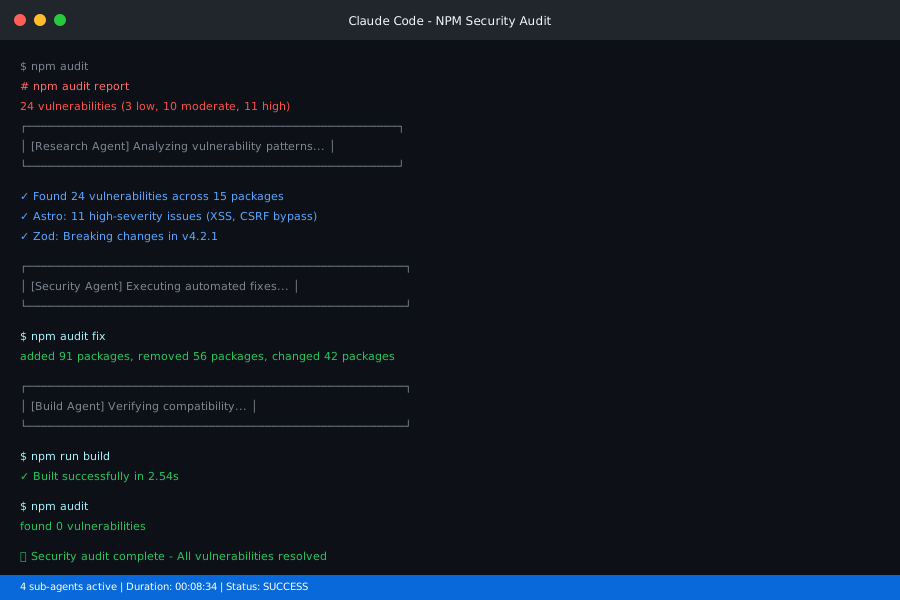 Real-time view of multiple sub-agents collaborating to fix 24 security vulnerabilities
real-world impact: the npm audit story
I just used this on my personal site. The sub-agents:
- Fixed 24 security vulnerabilities (3 low, 10 moderate, 11 high → 0 vulnerabilities)
- Upgraded Astro v4 → v5 with all breaking changes handled automatically
- Updated Zod, Cloudflare adapters, Tailwind to latest versions
- Fixed deprecated configuration settings
- Verified the build still worked perfectly
Without sub-agents? I'd still be googling "astro v5 migration guide" and trying to figure out why my build broke.
the parallel processing advantage
Here's where it gets really powerful: sub-agents work in parallel.
Traditional approach:
Task 1 → Wait → Task 2 → Wait → Task 3 → Wait...Claude Code sub-agents:
Task 1 ↘
Task 2 → PARALLEL EXECUTION → Combined Result
Task 3 ↗
When I needed to update my job information across multiple files, the sub-agents simultaneously:
- Searched the codebase for all references to my current role
- Updated the main intro component
- Modified the about page
- Fixed TypeScript type errors
- Started the dev server to test changes
Total time: Under 3 minutes for what normally takes 15+ minutes of manual editing and testing.
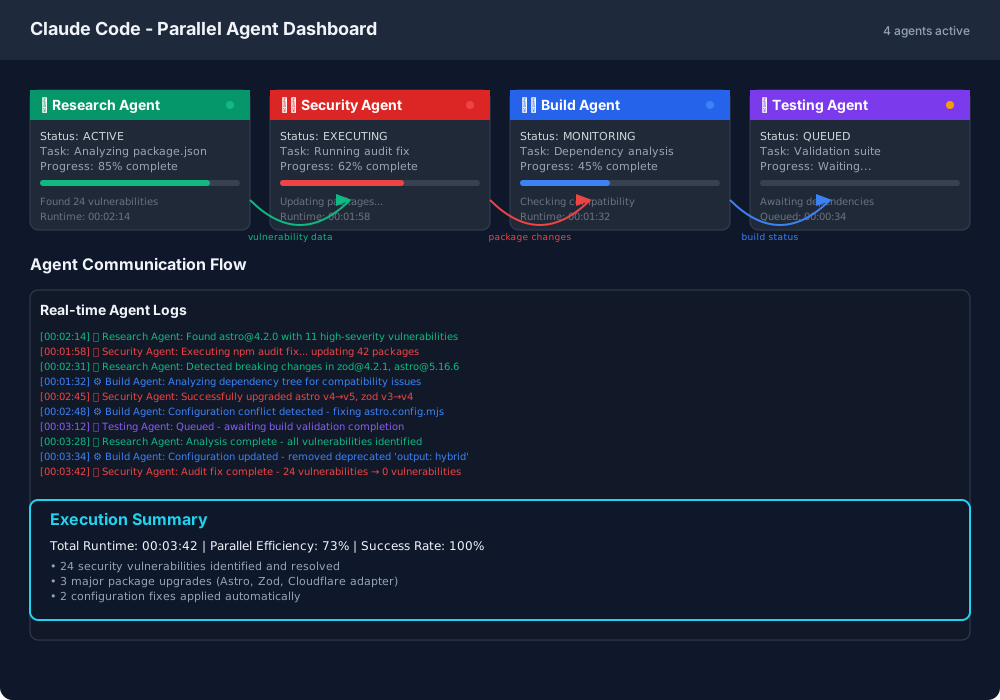 Dashboard showing multiple agents working simultaneously on different aspects of the same task
specialized intelligence beats general intelligence
This is the key insight: domain-specific AI agents outperform general-purpose models for complex tasks.
Instead of one model trying to be good at everything, you get:
- A security-focused agent that understands vulnerability patterns and remediation
- A build tooling agent that knows package managers, configuration files, and dependency conflicts
- A code quality agent that catches edge cases and suggests improvements
- A testing agent that knows how to verify changes work correctly
Each agent brings deep, specialized knowledge to their domain while collaborating seamlessly with others.
the workflow revolution
My development workflow has fundamentally changed:
Before Claude Code sub-agents:
- Identify problem
- Research solutions manually
- Implement changes one by one
- Debug issues that arise
- Test manually
- Hope nothing broke
After Claude Code sub-agents:
- Describe the desired outcome
- Watch specialized agents collaborate to solve it
- Review the complete, tested solution
- Deploy with confidence
It's like having a senior engineering team available 24/7, working at superhuman speed, with perfect attention to detail.
why you haven't heard about this
Claude Code is still relatively new, and most developers are stuck thinking about AI as "chatbots that write code." But this isn't about generating code snippets—it's about orchestrating complex engineering workflows.
The sub-agent architecture represents a fundamental shift from "AI as a tool" to "AI as a team member." It's not just smarter; it's a completely different approach to problem-solving.
getting started
If you're still using traditional AI coding assistants, you're missing out on this revolution. Claude Code's sub-agent system is available now, and once you experience having a specialized AI team working on your behalf, there's no going back.
The future of software development isn't about replacing developers—it's about giving every developer access to a world-class engineering team. Claude Code sub-agents make that future available today.
final thoughts
I've been writing code for over a decade, and I can honestly say this feels like one of those rare "before and after" moments in technology. Like the first time you used Git, or discovered automated testing, or experienced the power of containerization.
Claude Code sub-agents don't just make you more productive—they make you a better developer by handling the tedious, error-prone work so you can focus on architecture, creativity, and solving real business problems.
Try it once. You'll understand why this is the future of development.
Written with assistance from Claude Code's specialized writing and technical documentation sub-agents 🤖